Yacht types / 01 · Independent guide
Motor Yachts
Engine-powered cruising, open-air living and a choice of hull styles. Start with how you want to spend the day, then discover which motor yacht layout could fit.
- Character
- Powered cruising
- Compare
- Hull & deck layout
- Look closer
- Shade & motion
- Start with
- Your itinerary
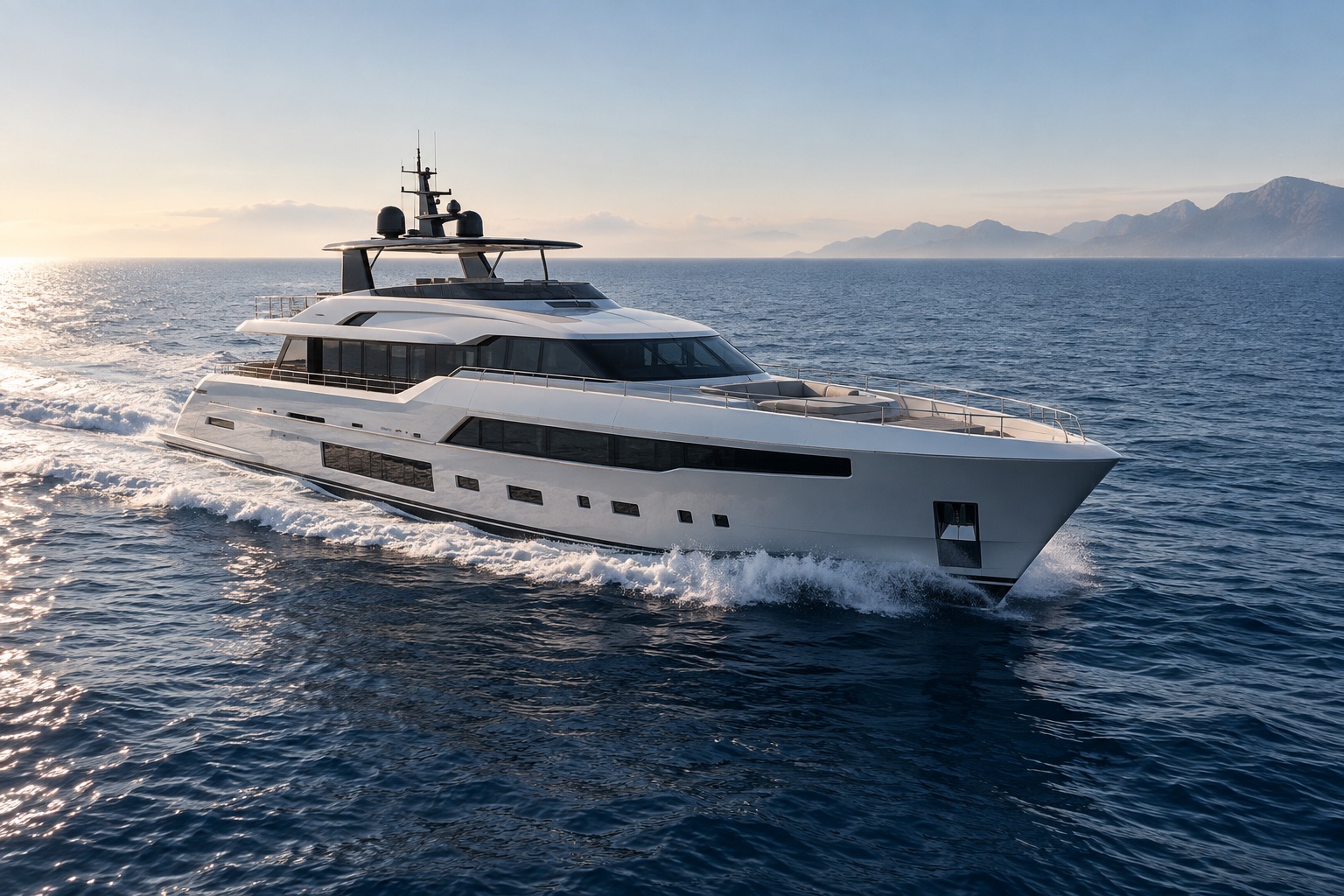
What is a motor yacht?
A motor yacht uses engines as its main means of propulsion. The term covers a wide variety of sizes, hulls and layouts; it does not promise a particular speed, level of service or number of cabins.
Three hull descriptions are useful starting points. A displacement hull moves through the water; a planing hull is designed to rise partly onto it at speed; a semi-displacement hull sits between those approaches. Compare the actual yacht’s operating speeds, fuel use and ride rather than assuming one label is better.
A flybridge adds an upper outdoor level, while an enclosed upper deck creates a different balance of shelter and open space. A long profile photograph tells you little about these everyday differences: the deck plan is the more useful next image.
Could it suit you?
Explore this category if you are drawn to coastal cruising, time at anchor and indoor–outdoor living. It is a useful starting point for a newcomer who wants to compare layouts without also considering a sailing rig.
The trade-offs depend on the boat and the trip. Faster passages can change fuel use, noise and comfort. More decks can mean more stairs. A generous sun deck does not necessarily provide generous shade.
If the sailing itself is part of the attraction, compare a sailing yacht. If broad living areas matter more than a particular silhouette, also look at catamarans.
What to compare
Shade and circulation
Locate the shaded dining and lounging areas on the plan. Then trace the route from cabin to deck, swim platform and tender. Steps, narrow passages and exposed seating matter more in daily use than an overall length.
Motion and stabilisation
Ask which stabilisers are fitted and whether they work underway, at anchor or both. Stabilisation can reduce some movement; it does not make a yacht motionless or guarantee comfort in every sea.
Cabins and crew spaces
Compare bed arrangements, bathroom access and cabin positions, not just the berth count. For a crewed arrangement, ask who handles navigation, meals, housekeeping and tender trips, and how that fits your expectations.
Tender and water access
Check the tender’s practical passenger capacity, boarding steps and storage arrangement. Ask how launching it affects the swim platform or other guest spaces.
Condition and operating information
A build year or a refit headline is not a condition report. Look for current equipment details and maintenance records, and seek an independent inspection when a purchase warrants it.
How to read the costs
This guide does not offer yachts or quote charter rates. If you later request a charter proposal, compare the base fee with the written inclusions, operating expenses, taxes, berth charges and any delivery costs.
If an expense allowance is requested, ask what it covers and how spending is accounted for. For ownership, research maintenance, crew, mooring, insurance and fuel separately from the purchase price. Neither total can be inferred from length alone.
Let the route shape the choice
A Riviera harbour itinerary and a week of island anchorages may call for different priorities. Berth dimensions, draft, tender access and the distances between stops should inform the shortlist.
Use the destination guides to begin exploring places, then have a qualified operator assess the actual yacht, season and route together. Engine power does not remove weather limits.
Your next step
Write down three priorities: where you want to spend time, how your group wants to live aboard, and which compromises you will accept. Use those to compare deck plans before comparing names or length.
Questions
Yes, if engine-powered cruising and onboard living are what interest you. Compare layouts and planned passages first; the motor yacht label alone does not establish comfort or suitability.
No. Wind, waves and passing traffic can move any yacht. Ask whether the yacht has stabilisation that operates at anchor, and understand that it reduces some movement rather than eliminating it.
A flybridge is an upper outdoor level, usually with a helm position and sometimes seating or dining areas. Check its shade, stair access and layout rather than treating it as automatically useful extra space.