Yacht types / 05 · Independent guide
Explorer Yachts
A different horizon starts with different questions. Discover the explorer idea through range, onboard support and the route it is meant to serve—not the rugged silhouette alone.
- Character
- Journey-led design
- Compare
- Capability & support
- Look closer
- Range assumptions
- Start with
- The intended region
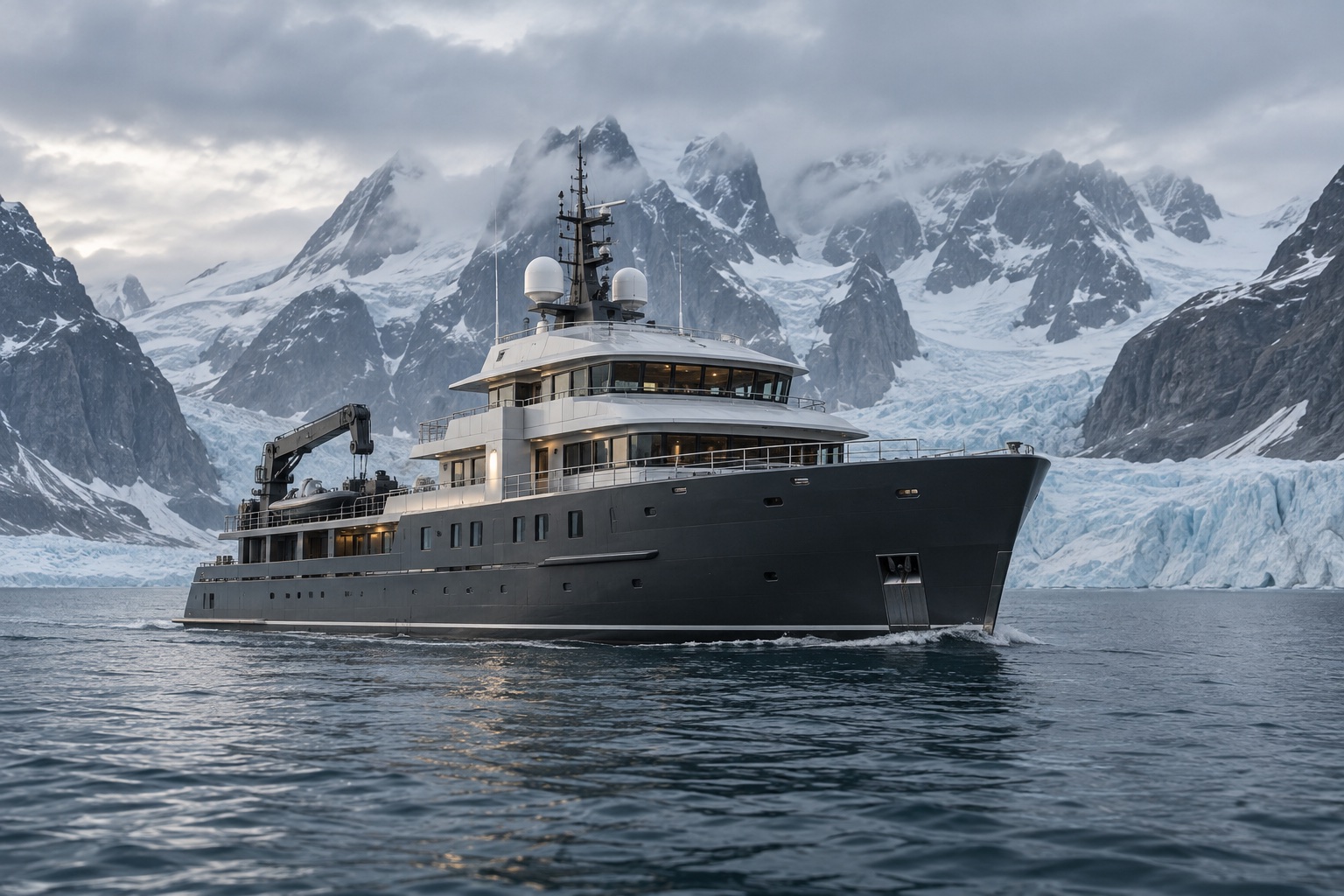
What is an explorer yacht?
Explorer and expedition are terms used for yachts intended for extended or more remote cruising. The label alone does not establish a particular range, ice capability, construction material or level of self-sufficiency.
Some are purpose-built yachts; others began as working vessels and were converted. Either origin leaves questions to answer about condition, layout, machinery and the intended operation. Neither is proof that a yacht is better suited to a route.
Think of this as a capability-led approach rather than a separate hull formula. An explorer can also be a motor yacht or a superyacht. The useful question is what the actual vessel and its operating team are equipped to do.
Could it suit you?
Explore the category if the destination and the journey matter more than moving between familiar marina stops. You may be interested in longer passages, wildlife, photography or carefully organised activities away from established infrastructure.
Remoteness changes the experience as well as the logistics. Plans may need to adapt, resupply can be limited and time ashore may depend on tenders and local conditions. Consider whether that uncertainty is part of the attraction for your group.
If you mainly want coastal dining, beach stops and short transfers, compare a motor yacht too. Explorer styling does not automatically add something useful to that kind of trip.
What to compare
Range with its assumptions
Ask what speed, loading, weather assumptions and fuel reserve sit behind a quoted range. A headline distance is not a confirmed itinerary or a promise of endurance in all conditions.
The actual operating area
Ask the responsible operator to confirm the vessel’s suitability, permissions and limits for the proposed region. An explorer name, steel hull or expedition photograph is not evidence of polar or ice capability.
Machinery and onboard support
Discuss how critical systems are maintained and what support is available if equipment fails. Ask about spares, fresh water, storage and provisioning in relation to the specific time away from resupply.
Equipment that can be used
A large tender, dive setup or deck crane matters only if it can be operated as intended. Ask about the equipment actually carried, its limits, required specialists and the conditions in which activities can proceed.
Crew and local expertise
Ask who will be responsible for the route and activities, what relevant regional experience they have and whether local guides or specialists are part of the plan. Capability belongs to the operation, not just the yacht.
Communications and contingency planning
Ask the operator how communications, emergency response and access to appropriate medical support are planned for the region. These arrangements need professional assessment; an equipment list is not a complete contingency plan.
How to read the costs
A remote trip can involve more than a charter fee: repositioning, provisioning, local support, specialist staff, permits and planned activities may each affect a proposal. Ask for a written breakdown tied to the actual route.
Clarify what happens when conditions change the programme, which costs are included and how additional expenses are agreed. For ownership, specialist capability also needs to be considered in ongoing maintenance and operational planning.
Begin with the region, not a promise
A high-latitude coast and a remote tropical archipelago pose different questions. Exposure, local infrastructure, environmental requirements, access ashore and distances from support all shape the plan.
Use the destination guides for initial discovery. For an expedition, the next step is a route-specific assessment by qualified operators and relevant specialists, using current local requirements—not a generic list of places an explorer can reach.
Your next step
Write a destination brief: where you want to go, why it matters, the activities you hope to do and the flexibility you have. Ask which capabilities that brief actually requires before comparing explorer yachts.
Questions
No. The label does not establish ice capability. The responsible operator must confirm the vessel’s actual classification, operating limits, crew and permissions for a proposed route.
Not automatically. Compare the individual vessel’s condition, conversion or build documentation, layout and operating capability. Its origin alone is not a reliable measure of comfort or suitability.
There is no universal minimum. Distances, access, resupply, weather flexibility and the activities planned determine what is realistic. Develop the route with a qualified operator before choosing a duration.