Yacht types / 04 · Independent guide
Cata marans
Two hulls create a different way to live on the water. Explore the broad shared spaces, separated cabins and practical trade-offs of a sailing or power catamaran.
- Character
- Twin-hull living
- Compare
- Sail or power
- Look closer
- Beam & cabin access
- Start with
- How you share space
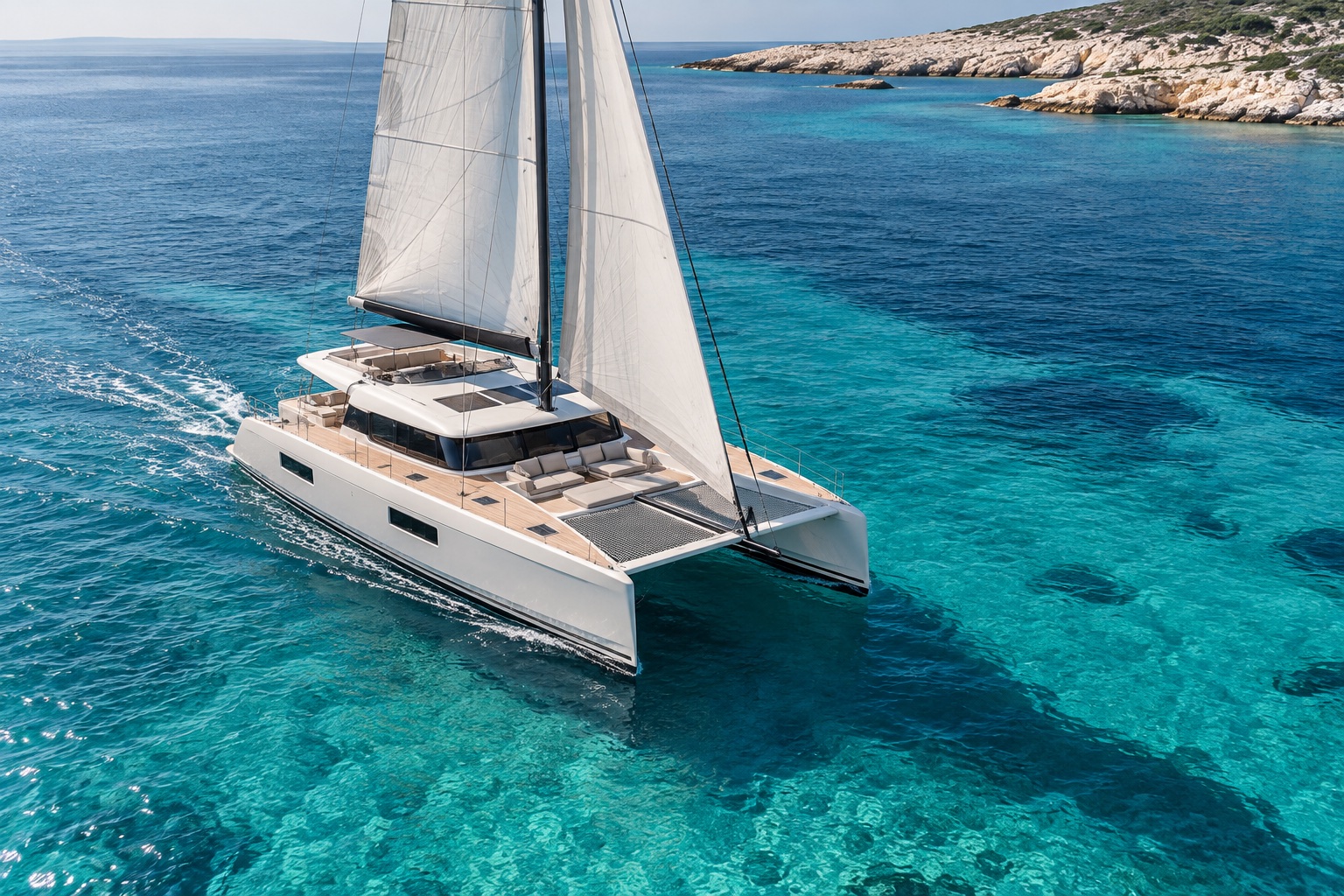
What is a catamaran?
A catamaran has two hulls connected by a central structure. It can be driven by sails or engines, so the term describes the hull arrangement rather than the propulsion or level of luxury.
The width—called beam—creates a different relationship between the main living area, outdoor seating and cabins. On many designs, cabins are in the hulls and the saloon is above the space between them. Check the actual plan: not every layout uses that space in the same way.
That width also matters away from the living room. Berths, tender placement and movement aboard deserve attention. A catamaran is a distinct design choice, not simply a wider version of every other yacht.
Could it suit you?
Explore catamarans if your priority is spending time together in open shared spaces while retaining separate cabin areas. Compare how the saloon, cockpit and outdoor seating connect, rather than relying on overall length.
A sailing catamaran offers a different movement pattern from a sailing monohull, but it is not motionless. Pitching, wave impacts and movement at anchor remain possible. Anyone concerned about comfort should discuss the particular boat and likely conditions.
Families and groups should inspect boarding points, stairs into the hulls, guardrails and the relationship between working and guest areas. A broad deck is not a substitute for appropriate supervision and onboard procedures.
What to compare
Sailing or power
Choose whether the experience of sailing is important to you. A power catamaran removes the rig from that decision, but fuel use, range and performance still need to be compared at a stated operating speed.
Cabin layout and crew accommodation
Check which cabins are available to guests, where crew sleep and how each space is reached. A headline cabin count can hide differences in berth shape, steps, storage and privacy.
Bridgedeck clearance
This is the gap between the water and the underside of the structure connecting the hulls. Ask how the design and loading affect wave impacts, noise and comfort; clearance alone is not a complete measure of the ride.
Draft and underwater appendages
Confirm the actual draft and whether boards or other appendages change it in use. Shallow draft can broaden route options, but it does not establish that a particular bay, anchorage or approach is suitable.
Energy and daily routines
Ask how refrigeration, cooking, charging and air conditioning are powered. Solar panels or batteries do not by themselves establish how long equipment can run quietly without a generator.
Berthing and water access
Check the yacht’s beam against intended marina arrangements, and inspect the tender and swim steps. These practical details can matter as much as the amount of lounge space.
How to read the costs
A catamaran is not automatically cheaper than a monohull. Compare the specific yachts, dates, service arrangements and written inclusions. For charter, ask which meals, drinks, fuel and activities are included and which remain extra.
Beam may affect berth availability and charges. For ownership, account for the actual engines, equipment and maintenance requirements rather than extrapolating from living area or length.
Let the water and the layout guide you
Island exploration and time at anchor can make a catamaran an interesting option. The destination guides are a place to start comparing regions, not a guarantee that one hull type suits every route.
Draft, beam, wind exposure, distances and access ashore all belong in the same conversation. Ask a qualified operator to assess the actual yacht and season before treating a shallow-water image as an itinerary.
Your next step
Compare a catamaran deck plan with a monohull plan for the same group. Mark the dining area, shaded seating, cabin entrances and water access. The useful differences quickly become clearer than a length comparison.
Questions
No. Some use sails and auxiliary engines, while power catamarans use engines as their main propulsion. Catamaran describes the two-hull arrangement.
No. A catamaran moves differently from a monohull, but waves and conditions still affect it. No hull type guarantees that a guest will feel comfortable in every sea.
No. Suitability depends on the yacht’s actual draft and appendages, as well as depth, tide, conditions and local restrictions. The captain or operator must assess the intended route.